Clipboard, Confidence, Compromise: When Attackers Skip the Firewall Entirely
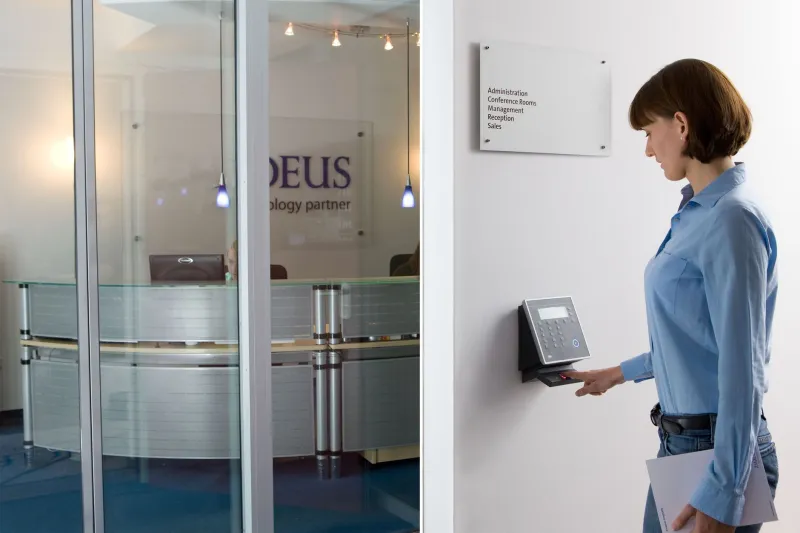
The Cheapest Exploit Is a Polite Smile
Security budgets at mid-market and enterprise organizations routinely run into seven figures for endpoint detection, email filtering, and identity platforms. Yet a social engineer with a $4 clipboard and a delivery uniform can frequently accomplish what ransomware operators spend six figures attempting: hands-on access to a corporate network. In penetration tests across US offices, physical entry attempts succeed at rates that would alarm any board if reported alongside phishing metrics—and they almost never are.
The pattern is consistent. Attackers increasingly skip the digital perimeter altogether because the physical one is softer. A phishing campaign requires infrastructure, domains, and evasion techniques. Walking through a lobby requires nerve and a plausible story.
Tailgating Is a Cultural Problem, Not a Technical One
Badge systems are designed to record entry, not prevent it. The typical US office sees dozens of tailgating opportunities per hour: smokers propping doors in loading areas, employees swiping through and holding the door for a stranger carrying two coffee cups, conference guests waved through by receptionists juggling phone calls.
The failure is not that employees lack training—it is that the training conflicts with social norms. Every American workplace drills politeness into its culture. Holding a door is a virtue; challenging a stranger is confrontational. Attackers understand this better than security teams do. They dress slightly below management level, carry the props of junior staff—a lanyard, a laptop bag, a phone pressed to the ear—and exploit the fact that no one wants to be the person who questioned a colleague.
Pretexting: The Scenarios That Keep Working
The playbook has barely changed in two decades because it keeps working:
- The HVAC contractor. A hard hat, a work order, and a request to access a wiring closet "to check airflow" places an attacker within reach of network jacks in under ten minutes.
- The stranded executive. "I left my badge in my other bag—can you let me into the third floor? I have a board prep call." Receptionists are selected, not randomly targeted, precisely because they want to be helpful.
- The after-hours auditor. Evening entry attempts exploit reduced staffing, when the one person at the front desk faces pressure to close out their shift.
- The conference badge. A lanyard from any industry event, worn with purpose, functions as a universal credential in buildings where nobody knows every employee's face.
Each scenario defeats a control that appears in the security policy document. None of them defeats a control that exists in practice.
Where Policy and Front-Desk Reality Diverge
Nearly every organization MetaCortex Security assesses has a written physical access policy. The gap between that document and lobby behavior follows a predictable pattern:
- Visitor management exists but is bypassed under pressure. During peak arrival windows or staffed short, the sign-in process degrades into a nod and a wave.
- Escort requirements are unenforced. Policies state visitors must be escorted; nobody is assigned to escort, and nobody tracks whether it happened.
- Service entrances are the forgotten perimeter. Loading docks, parking garages, and delivery corridors frequently lack the same camera coverage and access logging as main lobbies.
- Physical and digital teams don't talk. The facilities group manages badges; the security operations team manages endpoints. Neither owns the wiring closet where the two worlds meet.
This last point deserves emphasis. An attacker who reaches an unmonitored conference room can plug into a wall jack, plant a small network implant, and walk out—all captured on a badge system that shows nothing unusual because no badge was used.
An Audit Checklist for IT Leaders
Before an external assessor—or an attacker—runs this test for you, run it yourself:
- Commission a red-team physical assessment. Insist that tailgating and pretexting attempts are in scope, and require the findings to reach the same leadership audience as your phishing metrics.
- Walk the service paths. Enter through your own loading dock, garage stairwell, and side doors. Time how long unescorted access takes.
- Test the wiring closets. Are they locked, logged, and camera-covered? Can a wall jack in a public conference room reach the production network, or is NAC in place?
- Interview the front desk. Ask reception staff what they are instructed to do when someone forgets a badge. The honest answer is frequently "let them in and email security later."
- Rehearse the challenge. Employees need a script that lets them be firm without being rude: "I'm not sure I've seen you before—let me walk you to reception." Culture change starts with giving people permission to say it.
- Connect the logs. Badge entry events, camera systems, and network access controls should feed the same monitoring pipeline as your identity providers. Physical anomalies deserve the same triage as impossible-travel alerts.
Converge the Budgets, Not Just the Buildings
The security industry has spent a decade talking about IT/OT convergence while underinvesting in physical-digital convergence. For most US enterprises, the lobby remains the least monitored, least tested, and least expensive attack surface they own. Closing that gap does not require new technology so much as new ownership: a named executive accountable for what happens between the sidewalk and the workstation.
Attackers have already done the math. The firewall is hard; the front door is easy. Your audit schedule should reflect the same arithmetic.